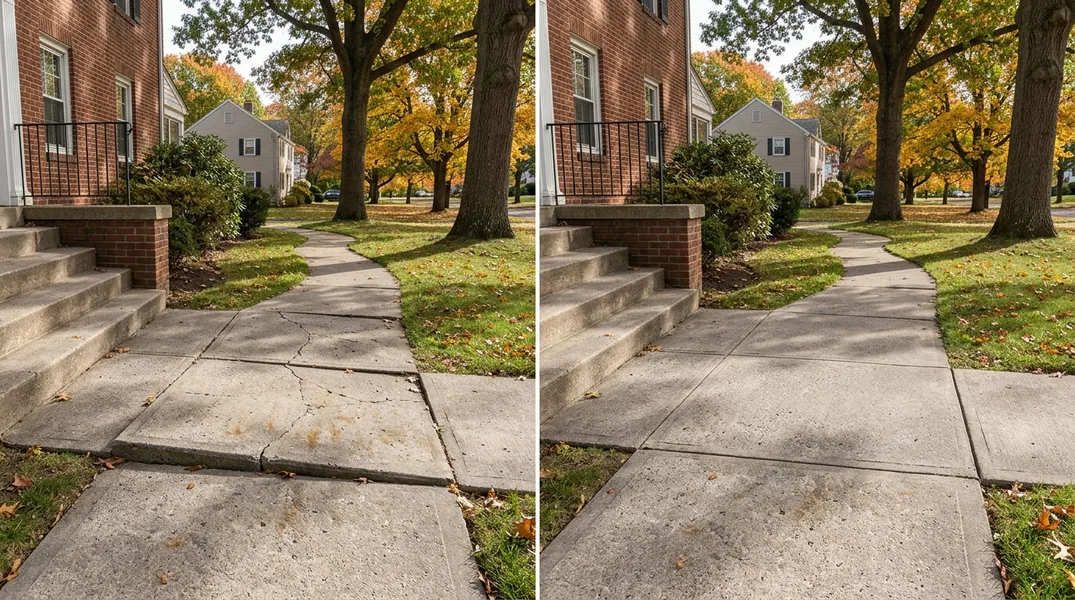
Understanding Lake Hitchcock Clay and Its Impact on Concrete
If you own a home or business in Hartford, you're building on some of the most challenging soil conditions in New England. Much of the region sits atop Lake Hitchcock clay, a glacial deposit left behind thousands of years ago when a massive glacial lake covered the Connecticut River Valley. This clay is dense, fine-grained, and has a critical weakness: it expands and contracts dramatically with changes in moisture content.
When Lake Hitchcock clay absorbs water, it swells. When it dries, it shrinks. This constant movement creates uneven settling beneath concrete surfaces, putting tremendous stress on the material above. A Concrete Driveway built on properly prepared soil can last decades, but when that soil is shifting beneath it, even the best concrete installation will eventually show cracks, heaving, and settlement problems. Homeowners in Hartford often discover this the hard way, noticing that their once-smooth driveway has developed a subtle slope or visible seams where sections have moved relative to each other.
Freeze-Thaw Cycles: Connecticut's Seasonal Concrete Enemy
Connecticut winters are brutal on concrete. The freeze-thaw cycle is one of the most destructive forces your driveway will face. Here's how it works: water seeps into tiny pores and micro-cracks in concrete. When temperatures drop below freezing, that water expands as it turns to ice, exerting pressure on the surrounding concrete from the inside. When the temperature rises again, the ice melts, leaving behind small voids. Repeat this cycle dozens of times each winter, and those voids multiply and connect, creating larger cracks and spalling (surface deterioration where chunks of concrete break away).
Hartford experiences an average of 60 to 70 freeze-thaw cycles per year, well above the threshold where significant damage becomes inevitable. Concrete that wasn't air-entrained (a process that intentionally introduces tiny air bubbles to accommodate ice expansion) becomes especially vulnerable. Many older driveways in the area show classic freeze-thaw damage: scaling on the surface, horizontal cracks, and sections that seem to be crumbling from the outside in. If your driveway is showing these signs, Concrete Repair & Resurfacing may be necessary to prevent the damage from spreading deeper into the structure.
Road Salt and Concrete Scaling: A Vicious Chemical Attack
Every winter, Connecticut Department of Transportation crews and private contractors spread thousands of tons of road salt across Hartford's streets and highways. While salt is essential for safety, it's devastating to concrete. Road salt doesn't just sit on the surface; it dissolves in water and penetrates deep into the concrete matrix. Once inside, it triggers a chemical process that weakens the concrete's structure and accelerates deterioration, especially when combined with freeze-thaw cycles.
Concrete scaling occurs when salt crystals form beneath the surface layer of concrete. As these crystals grow, they push outward, breaking the bond between the surface paste and the aggregate (sand and gravel). The result is visible spalling and flaking, where the top layer of concrete literally peels away in chunks. This is particularly common on driveways that are regularly exposed to salt spray from passing vehicles or that are treated with de-icing salts. Once scaling begins, it's nearly impossible to stop without professional intervention. The damaged surface becomes increasingly porous, allowing more salt and water to penetrate deeper, accelerating the deterioration. Homeowners who notice white, powdery deposits on their driveway or visible surface flaking should contact a professional immediately for free estimate to assess the damage.
Why Hartford Homeowners Face a Perfect Storm of Concrete Damage
The real problem for Hartford homeowners isn't any single factor; it's the combination of all three. Lake Hitchcock clay creates an unstable foundation that encourages water infiltration. Freeze-thaw cycles exploit that water infiltration by expanding ice crystals and creating cracks. Road salt then penetrates those cracks and accelerates chemical deterioration. A driveway that might last 30 to 40 years in a more forgiving climate may show significant damage in just 10 to 15 years here.
This isn't a failure of concrete as a material; it's a reality of building in New England. Professional concrete contractors in Hartford know this, which is why they use special techniques like air entrainment, proper slope for drainage, and thickened slabs to help concrete survive the local environment. Even with these precautions, regular maintenance and timely repairs are essential. Ignoring small cracks or surface damage allows water to penetrate deeper, where it can freeze and cause exponential damage in subsequent winters.
Protecting Your Concrete Driveway in Hartford: Prevention and Maintenance
The best defense against freeze-thaw and salt damage is prevention. If you're planning new construction, work with a contractor who understands Hartford's specific soil and climate challenges. Air-entrained concrete, proper base preparation to account for Lake Hitchcock clay movement, and a well-designed drainage system are non-negotiable. Seal coating your driveway every two to three years creates a barrier that slows water penetration and helps protect against salt intrusion. This simple maintenance step can add years to your driveway's life.
For existing driveways, regular inspection is crucial. Look for early signs of trouble: small cracks, white salt deposits, or areas where the surface feels rough or is beginning to spall. Address these issues promptly. Filling small cracks with polyurethane or epoxy sealant prevents water from entering and freezing inside the concrete. If damage is more extensive, professional Concrete Repair & Resurfacing can restore functionality and extend the life of your investment. The cost of preventive maintenance is always lower than the cost of replacing a severely damaged driveway.
When to Call a Professional: Concrete Repair Near Me in Hartford
If your driveway is showing signs of freeze-thaw damage, salt scaling, or uneven settling due to Lake Hitchcock clay movement, it's time to call in a professional. Hartford Concrete has been serving the area for years, and our team understands exactly what your concrete is up against. We can assess the damage, identify the underlying cause, and recommend the most cost-effective solution, whether that's targeted repairs, resurfacing, or in severe cases, replacement.
Don't wait until small problems become expensive disasters. Concrete damage accelerates once it begins, especially in Hartford's harsh climate. Contact Hartford Concrete today at (860) 724-4929 or visit our website for a free estimate. We'll evaluate your driveway, explain what's happening, and help you make an informed decision about protecting this important part of your property.
Looking for a professional concrete contractor in Hartford? Hartford Concrete responds fast for all your concrete needs.
Get a Free QuoteOur services: Concrete Driveways · Concrete Patios · Stamped & Decorative Concrete