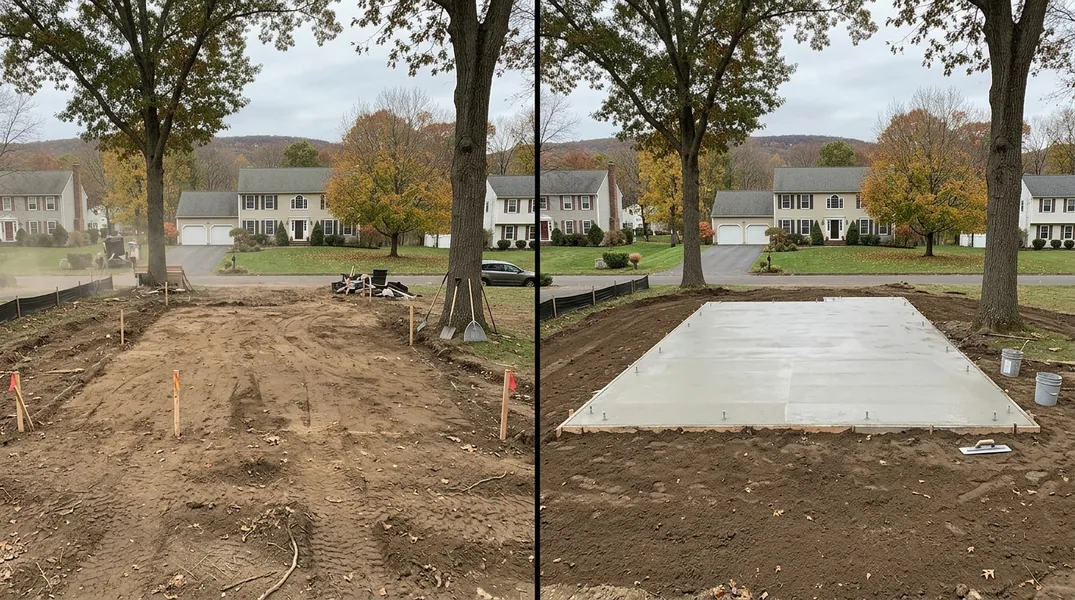
Understanding New Construction Concrete Slabs in Hartford County
Buying a newly constructed home in Hartford and the surrounding areas is exciting, but it also comes with unique responsibilities. Unlike purchasing an existing home where you're buying a structure that's already weathered several seasons, new construction means you're the first owner to experience how the foundation and concrete work perform under real-world conditions. The concrete slab is one of the most critical components of your new home, and understanding its quality, installation, and warranty coverage before you close is essential.
A concrete slab serves as the foundation for your entire home. It supports the structure, resists moisture infiltration, and distributes the weight of the building evenly across the soil. In Hartford County, where soil conditions can vary significantly from one neighborhood to another, the way a slab is poured, finished, and sealed directly impacts how well your home will perform over decades. Many homebuyers focus on cosmetic details like paint colors and appliances but overlook the foundation work that happens before the walls go up. This oversight can lead to costly problems down the road.
What to Look for During a Builder Foundation Inspection
A builder foundation inspection is one of the most important steps you can take before closing on a new home. This inspection should happen after the concrete slab has been poured and finished but before the framing is complete. At this stage, the slab is still fully visible and accessible, making it the ideal time to spot potential issues. During the inspection, you'll want to look for visible cracks, uneven surfaces, and signs of poor finishing work. Small hairline cracks are often normal as concrete cures, but larger cracks or cracks that are wider than a quarter-inch warrant further investigation and documentation.
Beyond visual inspection, you should check for proper slope and drainage around the perimeter of the slab. Water should drain away from your home, not toward it. If the slab is sloped incorrectly, water can pool against your foundation, leading to moisture problems in basements or crawl spaces. Ask your builder for documentation showing that the slab was properly reinforced with rebar or wire mesh, that a vapor barrier was installed beneath it, and that the concrete met the specified strength requirements (typically 3,000 to 4,000 PSI for residential applications). Request copies of all concrete supplier certifications and testing reports. These documents become invaluable if you ever need to file a warranty claim or pursue remediation work through Concrete Repair & Resurfacing specialists.
New Home Foundation Warranty: What's Actually Covered
Every new home comes with a new home foundation warranty, but these warranties vary significantly in scope and duration. Most builders offer a one-year warranty covering structural defects, and many provide a ten-year structural warranty through third-party warranty companies. However, it's critical to understand what 'structural defect' actually means. A small crack in the slab that doesn't affect the structural integrity of the home may not be covered, even though it could allow water infiltration. Settlement cracks, which occur as the soil beneath the slab compacts over the first year, are often excluded from warranty coverage. Before closing, request a detailed written explanation of exactly what your warranty covers, what it excludes, and what the claims process looks like.
Pay special attention to the warranty's fine print regarding moisture and water intrusion. Some builders exclude water damage that results from cracks in the slab, arguing that the homeowner should have maintained proper grading and drainage around the foundation. Others cover structural cracks but not cosmetic ones. Ask your builder whether the warranty covers repair or replacement and whether there are any deductibles. If you discover a problem after closing, you'll need to notify the builder within a specific timeframe (often 30 to 60 days) and provide documentation. Having photos and inspection reports from before closing makes this process much smoother and strengthens your position if a dispute arises.
Hartford County New Build Concrete: Soil and Climate Considerations
Hartford County's soil composition and New England climate create unique challenges for concrete foundations. The region experiences significant freeze-thaw cycles during winter, where moisture trapped in concrete expands and contracts as temperatures fluctuate. This repeated expansion and contraction can cause scaling (surface deterioration) and cracking if the concrete wasn't properly air-entrained or sealed. Additionally, Hartford County has areas with clay-heavy soil, which can shift and settle unevenly, putting stress on the slab. Other areas have sandy or rocky soil that drains well but offers less uniform support. A reputable builder will have conducted a soil test before construction and designed the slab and foundation accordingly, but it's worth asking to see those test results.
The concrete mix design for Hartford County new construction should account for these environmental factors. The concrete should include adequate air entrainment (tiny air bubbles that allow for expansion) and should be finished with a seal that protects against moisture penetration and salt exposure (especially if you live near areas where road salt is used). Ask your builder whether the concrete was sealed and what product was used. Some builders apply a penetrating sealer at the time of construction, while others leave it to the homeowner. If sealing is your responsibility, plan to have it done within the first year after closing, before the concrete has absorbed too much moisture and before the freeze-thaw cycles intensify.
Questions to Ask Your Builder Before Closing
Before you sign the final papers, prepare a list of specific questions about your home's concrete slab and foundation. Ask when the concrete was poured, who supplied it, and whether any admixtures (chemical additives) were used to improve performance in cold climates. Request the concrete's compressive strength test results and ask whether the slab was finished with a trowel or broom finish (broom finish provides better traction and is often preferred in areas prone to moisture). Ask whether a vapor barrier was installed beneath the slab and what type it is. Find out if the slab has any control joints (planned crack lines that direct cracking to specific locations) and whether they were properly spaced and sealed. Ask about the grading and drainage plan around your home and whether gutters and downspouts will direct water at least six feet away from the foundation.
Don't be shy about requesting documentation. Ask for the concrete supplier's invoice, any third-party inspection reports, and the builder's warranty document with all terms clearly outlined. If anything is unclear, ask for written clarification before closing. Many problems that appear years later can be traced back to decisions made during construction, and having detailed records makes it much easier to address them. If you have concerns after your inspection, consider hiring an independent foundation inspector (not affiliated with the builder) to review the work. The cost of this inspection, typically between $300 and $500, is minimal compared to the potential cost of foundation repairs later.
When to Call a Concrete Professional Near Me
If you notice issues with your concrete slab after closing, or if you simply want professional guidance on maintenance and protection, it's time to call an experienced concrete contractor. Whether you need advice on sealing, repair of minor cracks, or assessment of more serious problems, a local professional can provide peace of mind and help you avoid costly mistakes. Hartford Concrete serves homeowners throughout Hartford, West Hartford, East Hartford, and Wethersfield with expert concrete services, including maintenance, sealing, and Concrete Repair & Resurfacing. Our team understands the specific challenges that new construction foundations face in Hartford County and can help you protect your investment.
If you're closing on a new home soon or have already closed and want a professional evaluation of your slab's condition, reach out to Hartford Concrete for a free estimate. You can also call us at (860) 724-4929 to discuss your specific situation. Whether it's sealing a brand-new slab to prevent moisture problems or addressing cracks and damage that have developed over time, we're here to help you keep your foundation in top condition for decades to come.
Looking for a professional concrete contractor in Hartford? Hartford Concrete responds fast for all your concrete needs.
Get a Free QuoteOur services: Concrete Driveways · Concrete Patios · Stamped & Decorative Concrete